
Last updated: October 2026
A CBD lab report is the closest thing you’ll get to looking inside the bottle. It tells you whether the product contains what the label says, whether it contains THC and whether it’s been checked for contaminants. Yet most people never read one, mostly because they look technical. This guide walks you through a CBD lab report section by section, explains the jargon and gives you a quick checklist so you can spot a good report (and a bad one) in under a minute.
What is a CBD lab report?
A lab report, often called a certificate of analysis or COA, is a document from a testing laboratory showing the results of tests on a specific batch of a product. For CBD, the main tests are:
- Cannabinoid profile (potency): how much CBD, THC and other cannabinoids are in the sample.
- Heavy metals: lead, cadmium, mercury and arsenic.
- Pesticides: a screen for agricultural chemicals.
- Sometimes also residual solvents (from extraction) and microbiology (moulds, yeasts and bacteria).
The report should come from an independent lab, not the company selling the product, so the seller isn’t marking its own homework.
Step 1: check who tested it and when
At the top of the report you’ll find the lab’s name and contact details, the date the sample was received and tested, and a sample or batch number. Check three things:
- Is the lab independent? It should be a named testing laboratory, ideally accredited (you’ll often see ISO/IEC 17025 mentioned, the international standard for testing labs).
- Is it recent? A report from several years ago tells you little about a bottle made this year.
- Does the batch match? The batch or lot number on the report should match the number printed on your bottle or box.
Step 2: read the cannabinoid profile
This is the main table. It lists cannabinoids down one side and results across the other, usually in more than one unit. Here’s what you’re likely to see:
| Abbreviation | What it is |
|---|---|
| CBD | Cannabidiol, the main ingredient you’re paying for |
| CBDA | The raw acid form of CBD found in the plant |
| CBG / CBGA | Cannabigerol and its acid form (see CBG vs CBD) |
| CBN | Cannabinol |
| CBC | Cannabichromene |
| Δ9-THC | Delta-9-tetrahydrocannabinol, the intoxicating compound |
| THCA | The acid form of THC |
Understanding the units
- % (w/w): percentage by weight. A 10% oil should show roughly 10% CBD.
- mg/g: milligrams per gram. 10% is the same as 100mg/g.
- mg/ml or mg per unit: sometimes given per ml or per gummy/capsule, which is the easiest to compare with the label.
Does the CBD match the label?
Compare the measured CBD with the label claim. Small differences are normal, because no product is filled with laboratory precision. A large shortfall, for example a bottle labelled 10% testing at 6%, is a red flag.
Step 3: find the THC result
For a THC-free product, you want to see Δ9-THC (and ideally THCA) reported as “ND”, meaning not detected, or as below the lab’s limit.
- ND: not detected. The lab didn’t find any above the level its method can detect.
- LOD (limit of detection): the smallest amount the method can detect.
- LOQ (limit of quantification): the smallest amount the method can measure reliably. “<LOQ” means a trace may be present but too small to measure accurately.
Some reports also give a “total THC” figure, which adds Δ9-THC to the THC that would be formed from THCA. If total THC is shown, check that too.
Step 4: check heavy metals and pesticides
Hemp is very good at absorbing what’s in the soil, which is great for cleaning up land and not so great for a supplement. That’s why a good report includes a heavy metals panel, usually lead (Pb), cadmium (Cd), mercury (Hg) and arsenic (As), and a pesticide screen. Look for a “Pass” result or values below the stated limits.
Step 5: other tests you might see
- Residual solvents: checks that solvents used in extraction have been removed.
- Microbiology: checks for moulds, yeasts and bacteria such as E. coli and Salmonella.
- Terpenes: aromatic compounds; useful information, but not a safety test.
Red flags on a CBD lab report
- No lab name, address or contact details.
- No batch number, or a batch number that doesn’t match your bottle.
- A date from years ago.
- CBD far below the label claim.
- THC detected in a product sold as THC-free.
- No heavy metal or pesticide testing.
- A blurry screenshot that’s been cropped, or a report for a different product.
- A seller who won’t share the report at all.
The 60-second checklist
- Independent, named lab? ✔
- Recent date and matching batch number? ✔
- CBD close to the label? ✔
- THC “ND”? ✔
- Heavy metals and pesticides passed? ✔
If all five are ticked, you can be confident the bottle contains what it says.
Why this matters in Ireland
CBD oils are sold in Ireland as food supplements, and quality varies widely between sellers. Independent investigations in recent years have found products that contained much less CBD than their labels claimed, and some that contained THC. A lab report is the simplest protection you have as a buyer.
How we handle lab testing
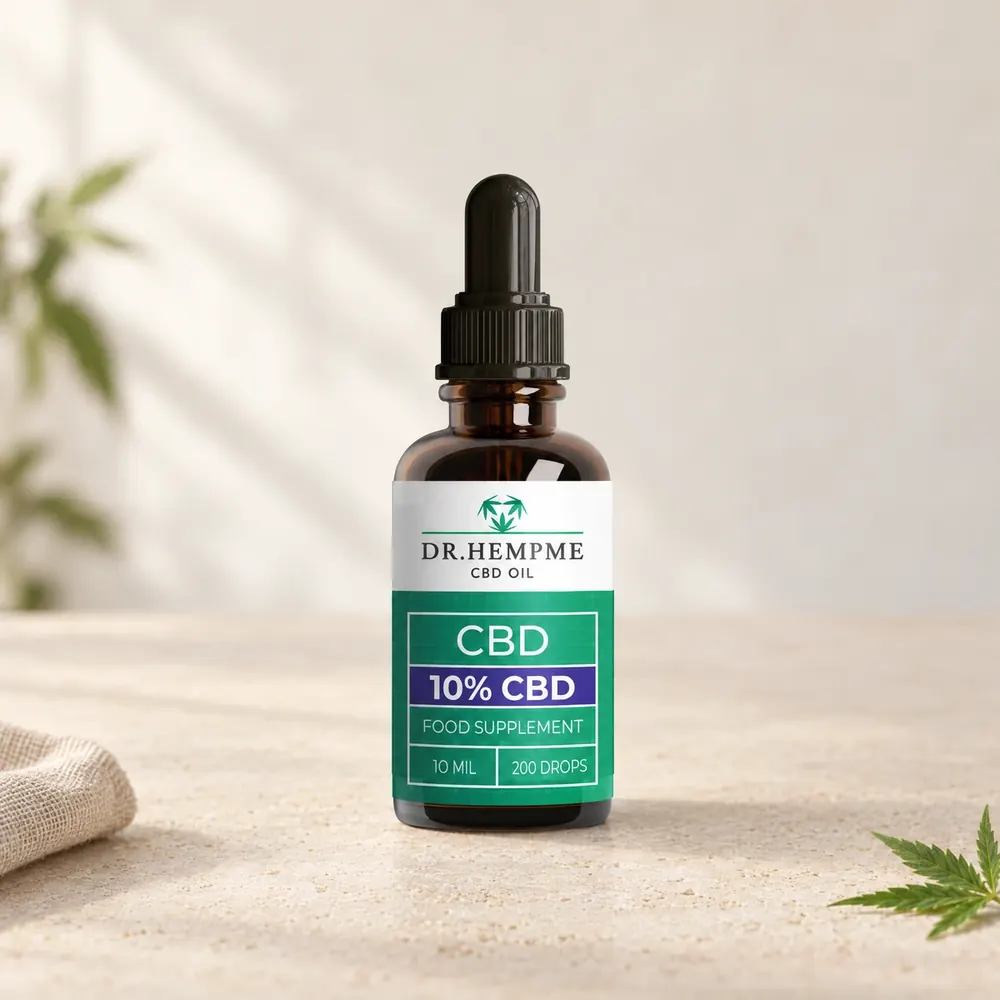
Every product CBD Éire stocks is made by the Irish CBD company Dr. Hemp Me and independently tested for CBD content, heavy metals and pesticides, and our CBD products are THC-free. If you’d like the lab report for any product, email us and we’ll send it. You can browse our CBD oils, CBG oils and gummies and capsules, and if you’re choosing a strength, see our CBD oil strength guide.
A worked example
Here’s a simplified example of the cannabinoid section of a report for a 10% CBD oil, with notes on how to read it:
| Analyte | Result (% w/w) | Result (mg/g) | What it tells you |
|---|---|---|---|
| CBD | 10.2 | 102 | Close to the 10% label claim: good |
| CBDA | <LOQ | <LOQ | A trace at most, too small to measure |
| CBG | 0.15 | 1.5 | A small amount of another cannabinoid |
| Δ9-THC | ND | ND | Not detected: what you want for a THC-free product |
| THCA | ND | ND | Not detected |
In this example, the CBD result matches the label, THC isn’t detected and only trace amounts of other cannabinoids are present. If the same report also shows heavy metals and pesticides as “Pass”, that’s a product you can trust to be what it says.
What if a product has no lab report?
Ask for one. If the seller can’t or won’t provide it, choose a different product. It’s that simple. A missing report doesn’t always mean a product is bad, but it means you have no way to check, and with so much variation in quality, that’s not a risk worth taking.
Why CBD quality varies so much
CBD products are made from hemp grown on different farms, extracted by different methods and blended by different companies, so quality can vary a lot. The plant itself varies from harvest to harvest. Extraction can concentrate contaminants if it isn’t done carefully. And some sellers simply don’t test every batch. That’s why one bottle of “10% CBD oil” can be very different from another, and why a recent, batch-specific lab report is worth more than any marketing.
Lab reports for gummies, capsules and creams
The same principles apply to other formats, but the units change. For gummies and capsules, look for mg of CBD per unit (for example 15mg per gummy) and check it matches the label. For creams and balms, look for the total mg in the jar. Contaminant testing matters for every format, including topicals.
Questions to ask a seller about testing
- Is every batch tested, or only some?
- Which lab tests your products, and is it independent?
- Do you test for heavy metals and pesticides as well as cannabinoids?
- Can you send me the report for the batch I’ll receive?
Frequently asked questions
What is a COA for CBD?
A certificate of analysis: a report from a testing lab showing the cannabinoid content of a batch and the results of contaminant tests such as heavy metals and pesticides.
What does ND mean on a CBD lab report?
Not detected. The lab didn’t find that compound above the smallest level its method can detect.
How do I know if the lab report matches my bottle?
Compare the batch or lot number on the report with the one printed on your bottle or box.
How close should the CBD result be to the label?
Close. Small differences are normal, but a large shortfall is a warning sign.
What heavy metals are tested in CBD?
Usually lead, cadmium, mercury and arsenic.
Should a CBD seller always provide a lab report?
Yes. A reputable seller will show it on the product page or email it to you on request.
Is a lab report from the manufacturer enough?
An independent lab is better, because the results don’t come from the company selling the product.
More CBD guides
- 10%, 20% or 30%: which CBD oil strength?
- CBG vs CBD: what’s the difference?
- CBD gummies vs CBD oil vs capsules
- CBD oil for dogs: a guide for Irish owners
- CBD oil in Dublin
- CBD oil in Cork
- CBD oil in Galway
- CBD oil in Limerick
- CBD oil in Waterford
CBD products are food supplements, not medicines, and are not intended to diagnose, treat, cure or prevent any disease. Not for under-18s, or if pregnant or breastfeeding.