
Last updated: October 2026
“Which strength should I buy?” is the question we’re asked more than any other. The percentages on CBD oil bottles can look confusing at first, but once you understand what they mean, choosing between a 10%, 20% and 30% oil is simple. This guide explains what the numbers mean, how many drops you’d take of each, how long a bottle lasts, what each strength costs per mg and how to decide which one is right for you.
What does the percentage on a CBD oil mean?
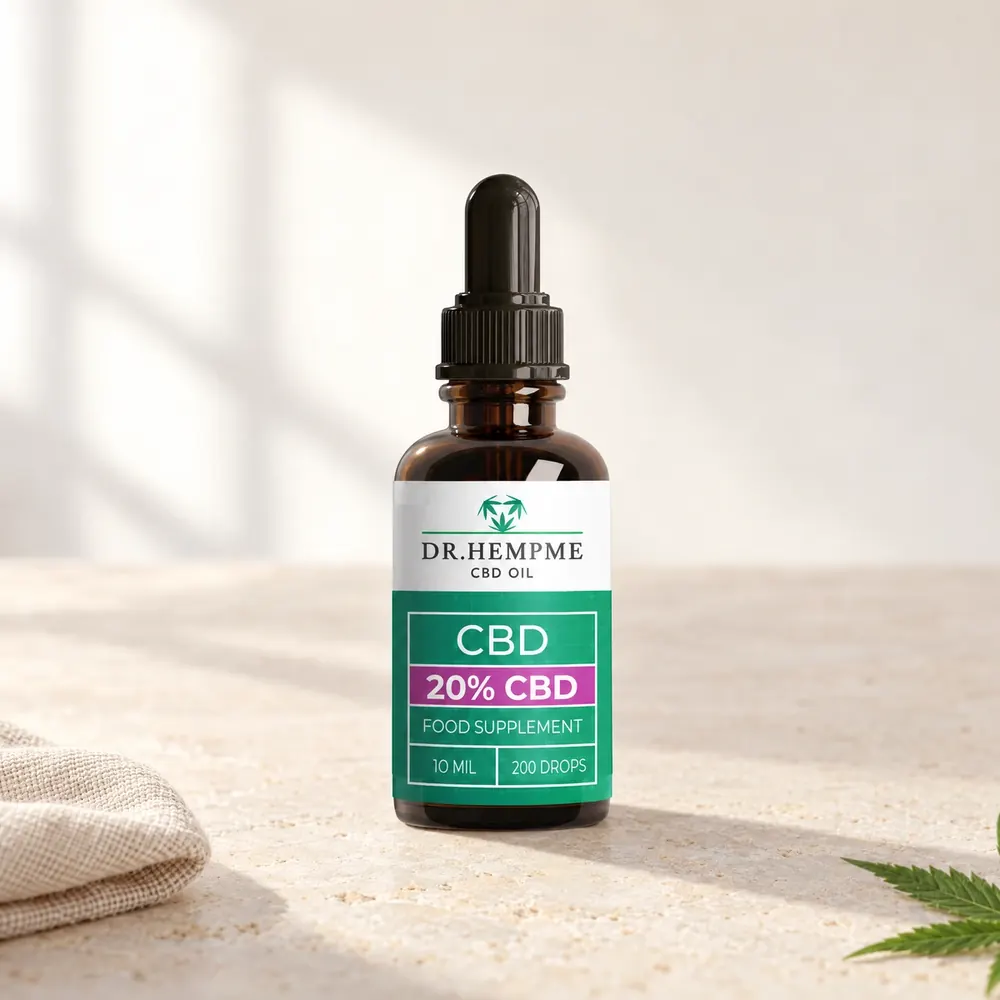
The percentage tells you how concentrated the oil is: how much of the liquid in the bottle is CBD. For a standard 10ml bottle:
- 10% = 1,000mg of CBD in the bottle
- 20% = 2,000mg of CBD in the bottle
- 30% = 3,000mg of CBD in the bottle
A higher percentage doesn’t mean a different kind of CBD. It’s the same CBD, just more of it in each drop. A stronger oil simply lets you take the same amount in fewer drops.
CBD per drop: the number that really matters
A 10ml bottle holds roughly 200 drops. Divide the total mg by 200 and you get the mg in each drop:
| Strength | Total CBD (10ml) | CBD per drop | 3 drops | 5 drops | 10 drops |
|---|---|---|---|---|---|
| 10% | 1,000mg | 5mg | 15mg | 25mg | 50mg |
| 20% | 2,000mg | 10mg | 30mg | 50mg | 100mg |
| 30% | 3,000mg | 15mg | 45mg | 75mg | 150mg |
Notice that 10 drops of the 10% gives the same 50mg as 5 drops of the 20%. That’s the whole point of the stronger oils: same CBD, fewer drops.
How long does a bottle last?
It depends on how many drops you take, not on the strength. At 5 drops a day, any 10ml bottle lasts about 40 days. What changes with strength is how much CBD you get in those 5 drops.
| Drops per day | How long a 10ml bottle lasts |
|---|---|
| 3 | about 9 weeks |
| 5 | about 6 weeks |
| 8 | about 3½ weeks |
| 10 | about 3 weeks |
Cost per mg: why stronger oils are better value
The fairest way to compare CBD oils is the price per milligram of CBD. Here’s how ours compare:
| Oil | Price | Total CBD | Cost per mg |
|---|---|---|---|
| 10% CBD oil | €59.95 | 1,000mg | about 6.0c |
| 20% CBD oil | €100 | 2,000mg | 5.0c |
| 30% CBD oil | €139.95 | 3,000mg | about 4.7c (plus a free CBD balm) |
If you only take a few drops a day, the 10% is the most affordable bottle to buy. If you take a lot of drops, a stronger oil costs more up front but less per mg, and each bottle lasts longer at the same daily amount.
Which strength should you choose?
Choose the 10% if…
- You’re new to CBD.
- You want to adjust your amount in small steps (5mg at a time).
- You take fewer than 8 drops a day.
The 10% oil is where most people start, and many stay on it.
Choose the 20% if…
- You’ve been taking 8 to 10 or more drops of the 10% a day.
- You’d like fewer drops (and less of the earthy hemp taste).
- You want better value per mg without jumping straight to the strongest oil.
The 20% oil is the most popular step up.
Choose the 30% if…
- You already take CBD and know you like a high daily amount.
- You want the most CBD per drop and the lowest cost per mg.
- You’d like the free 750mg CBD balm that comes with it.
The 30% oil isn’t usually the best starting point for beginners.
How to start: a simple two-week plan
Whichever strength you choose, the way you start is the same: low, slow and consistent.
- Week 1: take 3 to 5 drops of the 10% once a day, at the same time each day. Hold the drops under your tongue for about a minute before swallowing.
- Week 2: if you’d like more, add one drop every few days.
- After two weeks: settle on your amount. If it’s 8 drops or more of the 10%, consider moving to the 20%.
There is no single correct amount; people find what suits them by starting low and going slowly. Keep a short note of your drops, and if you take any medication, speak to your GP or pharmacist before you start.
Switching strengths without getting confused
When you move from one strength to another, work in mg rather than drops. For example, if you take 8 drops of the 10% (40mg), the same amount on the 20% is 4 drops, and on the 30% it’s about 3 drops (45mg). Write the new number of drops on a sticky note on the bottle for the first week.
Prefer not to count drops?
If counting drops isn’t for you, a set amount might suit you better:
- CBD gummies: 15mg per gummy, fruity taste.
- CBD capsules: 25mg per capsule, no taste.
See our comparison of CBD gummies vs CBD oil.
Strength isn’t everything: check the lab report
A strong number on the label only means something if the bottle really contains that much CBD. Always check the independent lab report: the measured CBD should match the label, THC should be “not detected” and the report should show tests for heavy metals and pesticides. Our guide on how to read a CBD lab report explains what to look for.
Strength for CBG oils and pet oils
The same maths applies to other oils. Our CBG oils come in 5% (500mg, about 2.5mg per drop) and 20% (2,000mg, about 10mg per drop). Our pet oils are chosen by your pet’s size: 5% for cats and dogs up to about 35kg, 10% for dogs of 35 to 55kg and 20% for large and giant breeds. Our guide for dog owners has worked examples.
Common strength mistakes
- Buying the strongest oil first. It’s tempting, but starting on a 10% makes it much easier to find your amount.
- Counting drops after switching strengths. Ten drops of the 30% is three times as much CBD as ten drops of the 10%. Always work in mg.
- Comparing bottle prices. The 30% costs more up front but less per mg.
- Changing your amount every day. Give each change a few days before adjusting again.
- Ignoring the lab report. A “30%” label is only meaningful if the lab confirms it.
Your daily amount at a glance
If you know roughly how much CBD you’d like each day, this table shows how many drops that is on each strength:
| Daily amount | 10% (5mg/drop) | 20% (10mg/drop) | 30% (15mg/drop) |
|---|---|---|---|
| 15mg | 3 drops | 1–2 drops | 1 drop |
| 25mg | 5 drops | 2–3 drops | about 2 drops |
| 50mg | 10 drops | 5 drops | 3–4 drops |
| 75mg | 15 drops | 7–8 drops | 5 drops |
These are just conversions, not recommendations: most people start at the low end and adjust slowly.
Why “mg per drop” is an approximation
Droppers aren’t laboratory instruments. The size of a drop depends on the dropper, the temperature of the oil and how you squeeze it, so “about 200 drops per 10ml” is a good rule of thumb rather than an exact figure. That’s another reason to keep your routine consistent: same bottle, same way of dropping, same time of day. If you want a precise amount every time, capsules (25mg each) or gummies (15mg each) take the guesswork out.
What about 5% CBD oils?
Some shops sell 5% oils (500mg, about 2.5mg per drop). They’re a gentle starting point, but because each bottle holds less CBD, they usually work out more expensive per mg, and many people find they need a lot of drops. That’s why we start our range at 10%, which lets you take a modest amount in a few drops while still giving good value.
Frequently asked questions
What strength of CBD oil should a beginner use?
Most beginners start with a 10% oil (5mg per drop) and a few drops once a day.
Is a 30% CBD oil three times as strong as a 10%?
Each drop has three times as much CBD (15mg vs 5mg). It’s the same CBD; you just need fewer drops for the same amount.
How many drops of 20% CBD oil equal 10 drops of 10%?
Five drops. Both give about 50mg of CBD.
How long does a 10ml bottle of CBD oil last?
At 5 drops a day, about six weeks, whatever the strength.
Which CBD oil strength is the best value?
Stronger oils cost less per mg. Our 30% works out at about 4.7c per mg against about 6c for the 10%.
Can I switch strengths?
Yes. Work out your daily amount in mg, then divide by the mg per drop of the new oil.
Is a stronger oil better?
Not necessarily. The right strength is the one that lets you take your amount in a comfortable number of drops.
More CBD guides
- How to read a CBD lab report
- CBG vs CBD: what’s the difference?
- CBD gummies vs CBD oil vs capsules
- CBD oil for dogs: a guide for Irish owners
- CBD oil in Dublin
- CBD oil in Cork
- CBD oil in Galway
- CBD oil in Limerick
- CBD oil in Waterford
CBD products are food supplements, not medicines, and are not intended to diagnose, treat, cure or prevent any disease. Not for under-18s, or if pregnant or breastfeeding. Check with your GP or pharmacist before use if you take medication.